Tuesday, 27 March 2012

Falklands Seabirds and Dolphins

After a rather rather protracted process, we are finally at sea. We were initially delayed in Ascension by 14 hours, so I went for a couple of walks (weather was thankfully not too warm or sunny) and other people went for a swim. We then had to wait for the ship to be cleared of its previous crowd and then again to complete refueling and boat testing. In the end we left a day and a bit late but with all kit sorted and ready for work. The ship was docked in Mare Harbour which I hadn't been to before so a chance for new walks. The first had penguins and dolphins but quite a bit of rain and wind as well. the second was quite special.


Sooty Shearwater feeding frenzy
 Two parts of a huge feeding mass of Sooty Shearwaters. Conservative estimate was 20,000 birds but maybe many more. By far thelargest feeding aggregating of seabirds I've seen. They were initially close in but then moved further away from the beach.


The beach on the headland.


Commerson's Dolphins surfing
 Commerson's Dolphins in the surf. They were chasing small fish and using the waves to surf in at speed and surprise the fish.


Turkey Vulture on war memorial
 And finally a rather macabre reminder of the history of the islands.

Monday, 19 March 2012

Off again and Humpbacks

Off south again on 21st March. Arguably a silly date to be flying to the southern hemisphere but never mind. Post-breeding dispersal of seabirds actually makes autumn an interesting time to down there. Route is Falklands, South Orkneys, NW Weddell Sea (just before the ice gets there, hopefully), South Georgia (with base calls), Falklands and then holiday time on Ascension Island on way back. Getting back early May.

Below is some video of Humpback Whales feeding off Cape Cod in the summer. We were out there to learn about some new kit we have but this was on a day off.


Saturday, 14 January 2012

Harrier images

Not Antarctic or seabird related, just an easy place to share these images of a Harrier at Ouse Fen whose parentage has been questioned - it is seemingly a Hen x Pallid Harrier hybrid. Click images for full size images, all heavily cropped. Better photos from the same day here

Hen x Pallid Harrier hybrid (aka Hellid)

Monday, 21 March 2011

Seabird problems

Firstly, the albatrosses and petrels on Midway got hit badly by the Japanese tsunami, many thousands of chicks lost and, more seriously for such  long lived species, many adults washed away with their plumage waterlogged. Fortunately seabirds can go long periods without food (due to sitting on eggs and small chicks while their partners go on long foraging trips) so they are still being pulled out of the debris healthy. More at http://peteatmidway.blogspot.com/

Also, something which would (should) be a big story if it wasn't for the way the world is at the moment, a bulk carrier has run aground on Nightingale Island (near Tristan da Cunha), details at http://www.tristandc.com/newsmsoliva.php. Latest updates show some badly oiled Northern Rockhopper Penguins (which are very cool creatures, when not oiled) but hopefully the majority of the population is away from the island by now. Fingers crossed for seabird species such as Spectacled Petrel (endemic) and Great Shearwater (most of the world population nest there).

Wednesday, 2 March 2011

Rothera camping (part of base training)


  Putting the tent up after digging down to some more solid snow

The Snow-cat that got us there, each bag of the roof is an individal set of sleeping equipment (ground mats, huge sleeping bags and liners).
 The caboose

 Selecting a dehydrated meal in the caboose


 The tilley lamp

Playing on a skidoo someone came up in (slightly staged, I put a coat on to drive the skidoo, but not for putting the tents up)


 The view down to the tents from the top of the slope

 The tents in the morning

The skidoo tracks in the morning

Sorry... I mean the unspoilt wilderness of Antarctica

Saturday, 19 February 2011

Orcas!

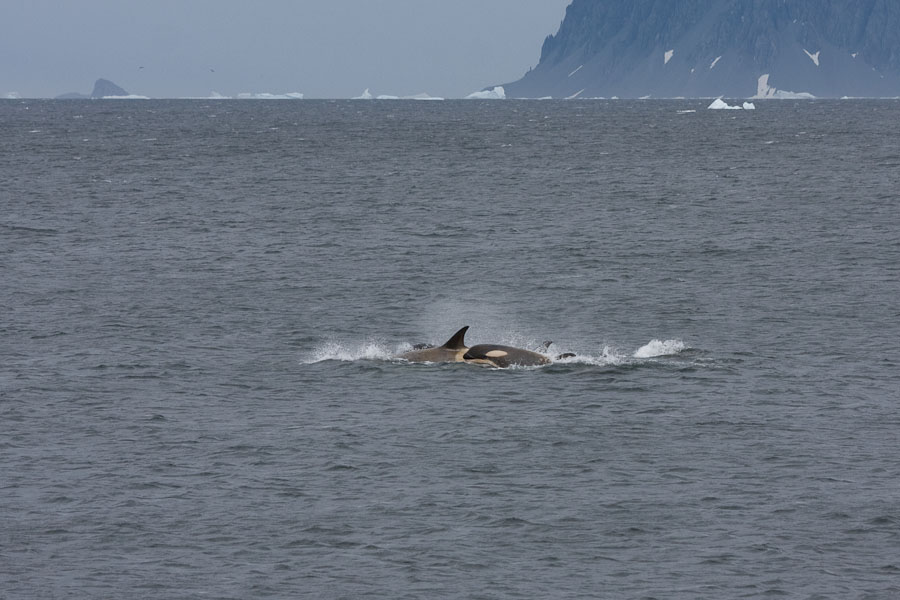
The pod of Orcas that has been around for a while are still making appearances once or twice a day, to the frustration of the dive team. They can't dive if there are Orcas or Leopard Seals around, though they did get a very good view a couple of days ago when the whales turned up just after they set off for a dive. Another pod that was around earlier are now off the Falklands (one of them was satellite tagged). I sat up by the memorials on Sunday morning, watching them come in from the south before they headed reasonably close past the wharf. Since then I have set up in the Bonner lab and can see them approaching the wharf from the office window, giving enough time to grab the camera and run out to get photos. The brown wash to their colouring is algae (diatoms) which often stain whales in the Southern Ocean and around Antarctica.


UK to Antarctica

Set off from the UK on 8th Feb and made it to Rothera on 12th after a couple of days delay in Punta Arenas due to bad weather at Rothera. Route is Heathrow to Madrid, Madrid to Santiago, Santiago to Punta Arenas and then the BAS Dash 7 from Punta.

 Madrid airport

 The Gould (an American research ship/icebreaker) in Punta

The Gould being dwarfed by a cruise ship

 Since my first visit in 2007 the seafront has been developed into a very pleasant area.

 But the stray dogs are still around

As are the broken jetties, which are inaccessible to the dogs so good for the birds


On the first day of delay we went to the local penguin colony, big business round here.
 On the second day of being stuck in Punta we went out to a forest reserve just out of town

 Glacier in Tierra del Fuego

 More of Tierra del Fuego


 The Dash 7 props

 The inside

On the apron in Rothera