Monday, 15 October 2012

Disco's Last Dance

After 50 years and one extension of life (and hull) refit, RRS Discovery is on her last research cruise. A blog for the cruise is http://discoslastdance.blogspot.co.uk/

It is being replaced by another RRS Discovery, extending the lineage to four ships, going back to Captain Scott's ship.

Discovery in Cape Town at the start of my first research cruise(s), two back-to-back cruises to the Crozet Islands, between November and January 2004/5


Discovery at the Crozet Islands (following year)

CTD coming out of the water. One of many thousands carried out over the years, gradually furthering our understanding of two-thirds of the Earth surface.
 
Feeding a skua on the back deck. Many fond memories of the ship.

Friday, 13 July 2012

Ascension Island

I didn't get round to this when I got back, so here are some photos from the four days we had on Ascension Island (just south of the equator in the middle of the Atlantic) at the end of April. The flight back from the Falklands stops on Ascension, hence the opportunity. See this post for my previous visit.


Early morning Green Turtle. The beach is a few minutes from the hotel and there are very few people there. There are visitors to the island for various reasons, but very few tourists.

 Turtle track


Immature Ascension Frigatebird


 Ascension Frigatebird. Endemic to the island. They patrol the beach at dawn looking for late hatching baby turtles.


 The geology of the island is from relatively recent volcanism.

White-tailed Tropicbird.
 The breeding seabirds are mostly confined to offshore stacks. Until 2001 there were feral cats on the island and there are still rats, though the sparse vegetation in many areas reduces their presence.

 Green Mountain. 800m high and a cloud forest (now). When Darwin arrived on the Beagle towards the end of his famous voyage he recognised the potential to increase the vegetation (older islands in the Galapagos are more vegetated than the more recent ones). He asked a friend who ran Kew gardens to send various species with each supply ship until vegetation was established. This had the feedback effects of capturing cloud vapour and creating thicker soil that could hold more water from the occasional heavy rain. This increased the water supply on the island, which until then had been a limiting factor to habitation. See http://www.bbc.co.uk/news/science-environment-11137903
 Massive contrast to the low ground.

 Fairy Tern
 Rats are common in the well vegetated areas

 Lowlands, with an old lava flow still clear

The main beach by Georgetown

 The colonisation continues, almost entirely by non-native species.

Green Turtle on Ascension
 A tardy turtle just starting to go back to the sea

 The way looks clear but is blocked by rocks exposed by the falling tide. In the end we had to steer it back to the sea.
 Sooty Tern.
By breeding synchronously and in large numbers they managed to keep breeding on the mainland despite the cats. They are doing better now the cats are gone. There are ongoing measures to control rats locally to the colonies, known as Wideawake Fairs after the local onomatopoeic name for Sooty Terns

Brown Noddies are now breeding amongst the Sooty Terns.

Wednesday, 11 July 2012

South Polar Skuas

Three South Polar Skuas from Rothera, to show variations in plumage

Intermediate South Polar Skua
Pale morph adult South Polar Skua

Dark adult South Polar Skua

Tuesday, 10 July 2012

Albatross Film from Midway - appeal

http://www.midwayfilm.com/

Fantastic, if bitter-sweet trailer. Appealing for funding  to complete project and produce feature film highlighting the beauty of the birds and the problems caused by plastic waste

Some (full res, I'm not at sea!) albatross photos to show how special these birds are:

Wandering Albatross

Light-mantled Albatross, with South Georgia behind

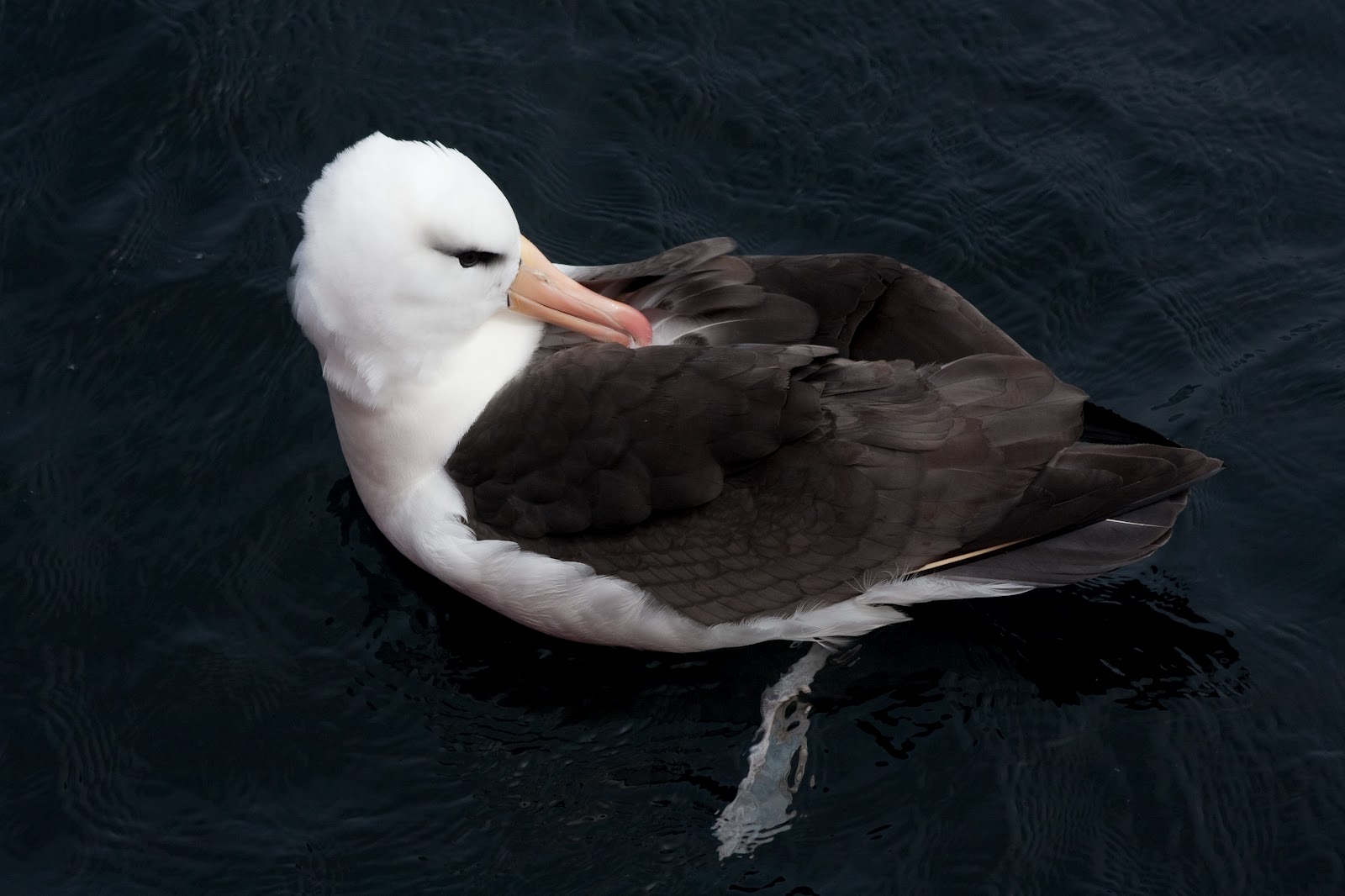
Black-browed Albatross

Wandering Albatross on nest with chick, that will stay on the nest through the winter

Thursday, 19 April 2012

Bird Island and scenic science

Called in to Bird Island on Sunday to deliver supplies for the winterers. Four people stay on the island over winter (from now until first call in October or November). They study the seals, penguins, albatross and other birds. A slightly confusing thing about visiting is that they live on GMT whereas we live on GMT-3 (and the proper time zone should be GMT-2). There's a certain sense of freedom that comes from realising you can pick your own timezone but it confused them why we were so keen for breakfast at what was 11am to them.

Supplies were stashed and waste taken out but unfortunately we didn't get a chance for a walk. The next group from the ship did, though I've been up the Wandering Albatross colony before, which tempered my envy!


Bird Island base. In another life where I chose biology over maths at school I may have ended up here as one of the winterers. Slightly odd seeing people living the life I chose not to.


Waste for collection on the jetty. Earlier in the season this beach is full of Fur Seals which make life difficult with their cantankerous nature. Much as Fur Seals are disliked locally they represent a huge conservation success story as not long ago there were only a few thousand in the world after unregulated hunting, now they are probably more than two million on South Georgia.

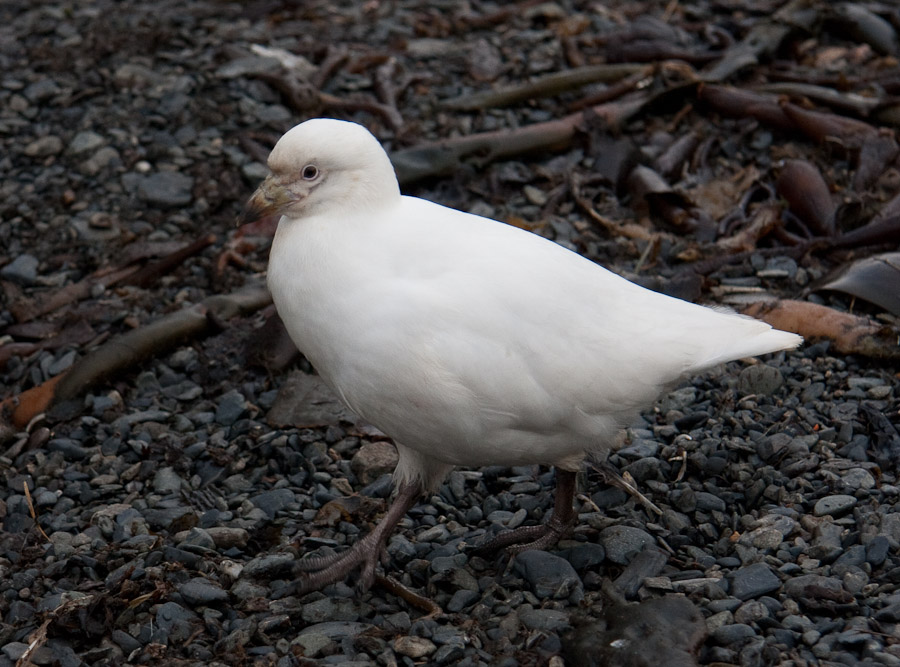
 Pale-faced Sheathbill, chicken-like things that scavenge anything they consider edible, and they're not fussy.

South Georgia Pipit, the most southerly breeding songbird. They are restricted to rat-free areas of South Georgia so should benefit very significantly if the current rat eradication plans are carried out successfully.

The way in to Royal Bay where we took some sediment cores to study past changes in the glacier extent. I got my telescope out which gave reasonable views of a large (several thousand) King Penguin colony.

More scenic science: the glacier feeding into Cumberland Bay East. We did a quick set of CTD casts to study the ocean heat reaching the glacier and the meltwater that comes out. The meltwater layer was very thin, about 5-8m, and we had to be careful not to stir it up too much with the ship's thrusters and propellor as we stopped to sample it.

 The weather on the north side of South Georgia is often good as it is in the rain and cloud shadow of the mountains and south-western side. Bird Island is at the exposed western end so is normally wet.

Right Whale Rocks at the mouth of Cumberland Bay. There is a story of a ship based at Grytviken whaling base that never left Cumberland Bay for a season as it just caught the local Right Whales. Fortunately Southern Right Whales are recovering well (northern hemisphere ones are down to a few hundred and struggling, but with recent good news) and there was indeed one in the bay. The first, of hopefully many, that I've seen close to South Georgia.

 Male Wandering Albatross, F39 (white), Shag Rocks area. This bird was ringed in 1983 as a breeding bird on Bird Island, South Georgia and as Wanderers are normally ten years old when they first breed it is at least 39, possible much older (thanks Jen for the history). It currently has a chick on the island. The oldest known albatross is a Laysan Albatross at Midway which is still breeding at 61,but Bird Island studies only started in 1958 so it's probably too early to say with certainty how old Wanderers can get. This bird was only about 100miles from its nest, but they can range huge distances while foraging, reaching well into the Pacific or up to Brazil. During their non-breeding phase they are free to roam and can loop round Antarctica. One young Grey-headed Albatross was recorded doing a complete lap in 46 days.

Friday, 13 April 2012

Sunlight!

After a prolonged period of overcast weather and/or the wildlife not being co-operative, very few photos have been taken by anyone.
Tough times in the Weddell Sea. It was -5C, but otherwise fantastic weather. There were 10 Fin, 11 South Right and a Humpback Whale during the day but none close enough for photographs.
Yesterday we finally got good light and lots of birds at the same time (we're just west of South Georgia now) so everyone was out with their cameras making up for lost time. We are also onto the coring section of the trip so my data collection is mostly done and the data is largely processed so there is a bit more time to go out and play. Selection below from my 650 photos from the day:

Chinstrap Penguin, This species is attracted into the ship and fair size groups can swim around behind the ship

 
Wilson's Storm Petrel. These birds rarely stay still, flying more like bats than birds. They mostly pick scraps from the surface but can dive underwater very briefly

 Grey-headed Albatross. Often seen but rarely poses for photographs.

Wandering Albatross saying hello. Some of the birds were ringed and I managed to get one combination so hopefully we can get the life history. Fair chance the bird was older than me.

Monday, 2 April 2012

Heading towards South Orkneys

We're now heading to the South Orkney Trough to deploy a mooring, adding to five already there looking at outflow of bottom water from the Weddell Sea. Dense water is formed around Antarctica (especially the Weddell Sea) due to it getting very cold and brine rejected when sea ice is formed. This flows down the continental shelf and around the bottom of the world's ocean (except North Atlantic). Being below 2000m it is not sampled by autonomous floats so these mooring and the deep transect we will do afterwards are still the main way the properties, and any changes, are monitored.

  
Wandering Albatross. One of these birds was ringed so will try to find out the details.

 Wilson's Storm Petrel, the other end of the size range

 Cattle Egret. They seem to pick a compass direction and disperse that way. Not a great plan if you breed at the southern tip of Chile. They can't land on water, can't feed and will die. Unfortunate but not our fault.

Minke Whale that came in while we were on station. Some Fin Whales were seen but not photographed (by me anyway), hopefully there will be more today, this seems to be a favoured spot.